How to Read an Earnings Release (and What Companies Want You to Notice)
Financial Literacy Month highlights that understanding money extends beyond budgeting or investing; it includes interpreting the information that drives financial decisions. Access to accurate and timely information is essential, and one of the most important sources is the earnings release.
Every quarter, thousands of companies publish earnings releases to communicate their financial performance to investors, media, and the public. These documents shape market perceptions, influence investment decisions, and provide a transparent view of a company’s health and strategy. They are a key tool in financial literacy, helping anyone interested in the market interpret performance and understand a company’s story.
If you’ve ever opened an earnings release, you may have wondered: What should I focus on? Which numbers matter most? And what do the company’s words really mean? Let’s break down how to read an earnings release, the information that matters most, and what companies want readers to notice. You’ll also learn how Business Wire, as a trusted global newswire, distributes this financial information accurately and fairly, ensuring investors, analysts, and the public have access to the same authoritative information simultaneously.
Understanding an earnings release goes beyond numbers. It’s a step toward becoming a more informed participant in financial markets, a core goal of Financial Literacy Month.
What is an Earnings Release?
An earnings release is a company’s official summary of financial performance over a specific period, typically a quarter or fiscal year.
It usually includes:
- Revenue: How much money the company earned
- Net income: Profit after expenses
- Earnings per share (EPS)
- Forward-looking guidance
- Commentary from leadership
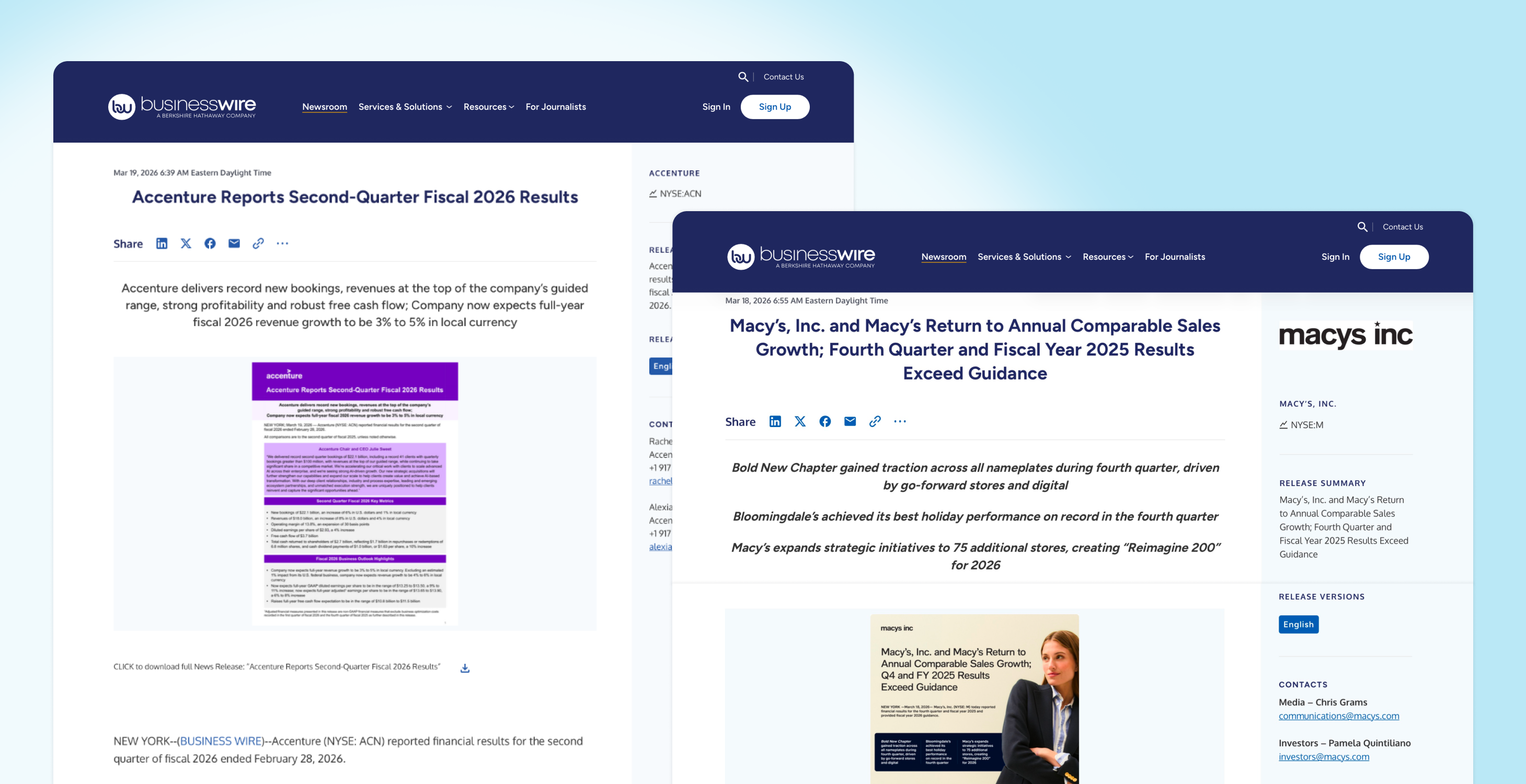
This information is presented in a standardized format for broad, simultaneous access, ensuring investors, analysts, and media receive the same information at the same time. In simple terms, an earnings release is the company’s official financial story, told on its own terms within regulatory guidelines.
What Should You Look for First?
If you only have 30–60 seconds, focus on these three elements:
Headline numbers
- Revenue
- EPS
- Growth (year-over-year or quarter-over-quarter)
These are often highlighted at the top of an earnings release because they drive immediate interpretation.
“Beat or miss”
Compare results to expectations:
- Did the company exceed analyst forecasts?
- Or fall short?
This comparison often matters more than the raw numbers themselves.
Guidance
Forward-looking statements about future performance can have a bigger market impact than past results. Start with performance, compare to expectations, then look ahead.
What are the Most Important Sections of an Earnings Release?
While formats vary slightly, most earnings releases follow a consistent structure.
1. Headline and Subheadline
The headline and subheadline spotlight the company’s most important achievements for the quarter, such as record revenue, strong growth, or results exceeding expectations. These are crafted to grab attention, set the tone, and guide readers toward the key messages the company wants to emphasize.
What companies want you to notice: The narrative starts here; language is carefully chosen to frame perception.
2. Key Financial Highlights
This section presents the most critical numbers in a clear, easy-to-read format, often as bullet points, including revenue, EPS, operating income, and profit margins. Summarizing these metrics upfront helps investors, analysts, and media quickly grasp overall performance.
Including visuals, charts, or video clips in an earnings release can help investors, analysts, and media quickly grasp key metrics and trends. Multimedia elements enhance clarity, highlight performance, and make your story more memorable.
What companies want you to notice: Metrics that define performance and frame the narrative for how the quarter is perceived.
3. CEO or Executive Commentary
Leadership quotes provide context beyond the numbers, explaining what drove the quarter’s performance. Executives often highlight strategic priorities, key initiatives, and market conditions that influenced results. This commentary shapes the narrative and gives insight into how the company interprets its own performance.
What companies want you to notice: The “why” behind the numbers and the story they want investors to remember.
4. Detailed Financial Statements
This section presents core financial data, often including the income statement, balance sheet highlights, and cash flow summary. It provides the numbers behind the headlines, allowing a deeper look at trends, assets, and liabilities.
What companies want you to notice: The full scope of financial performance and the underlying stability or growth of the business.
5. Guidance and Outlook
Forward-looking statements outline expectations for future revenue, market conditions, and strategic investments. Investors pay close attention, as these projections can influence market perception and decision-making.
What companies want you to notice: The company’s perspective on future performance and the narrative they are establishing for the next period.
6. Footnotes and Disclaimers
Footnotes include details such as non-GAAP reconciliations, accounting policies, and forward-looking statement disclaimers. These notes ensure numbers and projections are interpreted accurately.
What companies want you to notice: Accuracy, transparency, and context behind financial figures and projections.

Key Financial Terms to Know in an Earnings Release
Understanding key financial terms is essential for interpreting an earnings release, analyzing company performance, and making informed investment decisions. These terms appear frequently in press releases and media coverage, and knowing what they mean can help investors, analysts, and the public quickly grasp the story behind the numbers.
Revenue
Revenue is the total amount of money a company earns from its core business activities before deducting expenses. It indicates how much the company generated from selling products or services during the reporting period. Investors often focus on revenue growth to understand a company’s market traction and overall scale. Think: Top-line growth
EPS (Earnings Per Share)
EPS measures how much profit is allocated to each outstanding share of the company’s stock. It is a standard metric for comparing profitability across companies of different sizes. Analysts and investors frequently use EPS to evaluate earnings trends, calculate valuation ratios, and make investment decisions. Think: Profitability per share
Guidance
Guidance refers to management’s projections for future financial performance, including revenue, expenses, and other key metrics. Companies provide guidance to set expectations for investors, explain strategic plans, and communicate how market conditions may impact upcoming quarters. Guidance is closely watched because it often drives investor sentiment and stock price movement. Think: Where the company believes it’s going next
Year-over-Year (YoY)
Year-over-year (YoY) compares a company’s current performance to the same period in the previous year. This comparison helps adjust for seasonal trends and provides insight into long-term growth patterns. YoY metrics are commonly cited in earnings releases and financial media to highlight performance trends. Think: Growth over time, adjusted for seasonality
Non-GAAP Metrics
Non-GAAP metrics are adjusted financial figures that exclude certain one-time or non-cash items to show an alternative view of performance. Companies often use non-GAAP metrics to highlight operational results or trends that might be obscured in standard GAAP reporting. While these metrics can provide helpful insights, they should always be interpreted alongside GAAP figures for a complete picture. Important note: These can be helpful—but require careful interpretation
How Investors Interpret Earnings Results
Reading an earnings release goes beyond numbers. Context, expectations, and the company’s narrative are key. Investors compare performance to forecasts, track trends, and consider forward-looking guidance. Earnings releases distributed via newswires like Business Wire provide a reliable, authoritative source for analysts, media, and AI-driven tools.
Relative performance is critical. Even strong revenue or profit can disappoint if expectations aren’t met. Investors also focus on trends—consistent growth, improving margins, and sustainable performance reveal a long-term trajectory.
Forward guidance and narrative framing often drive market reactions. Strong past results paired with cautious guidance can lead to negative reactions, while weaker results with confident guidance may boost sentiment. Clear executive commentary and press release language influence perception, reinforcing the importance of narrative in financial decision-making.

Common Mistakes to Avoid When Reading an Earnings Release
Even seasoned investors can miss important details if they focus only on the surface. Use this checklist to make sure you’re interpreting earnings releases accurately and avoiding common beginner pitfalls:
Don’t focus only on revenue
Revenue growth is important, but profitability, margins, and cash flow provide critical context. Look beyond the top line to understand overall performance.
Don’t ignore expectations
A strong number isn’t always “good” if it misses analyst forecasts. Compare actual results to guidance and market projections to see the real impact.
Don’t overlook guidance
Forward-looking statements often matter more than past results. Pay attention to revenue, earnings, and strategic projections to anticipate market reactions.
Don’t skip the fine print
Footnotes, disclaimers, and non-GAAP adjustments provide essential context. These details can clarify anomalies or one-time items that affect interpretation.
Don’t take headlines at face value
Headlines are crafted to frame the story in the company’s favor. Always read the full release to understand the full narrative.
Why Earnings Releases Matter for Financial Literacy
Financial literacy extends beyond knowing terms to interpreting and using information. Earnings releases are a primary source, offering a standardized summary of quarterly or annual performance. Widely cited by media, analysts, and financial platforms, they provide transparency and help readers understand corporate results and market reactions.
Learning to read earnings releases reveals trends, profitability, and forward-looking guidance, giving a clearer view of company performance, a better context for financial news, and more confidence in navigating market information. This skill strengthens overall financial literacy and supports informed decision-making.
The Role of Distribution in Financial Transparency
Financial information is only useful if it reaches the right audience at the right time. Earnings releases are often distributed through trusted newswires to ensure that investors, analysts, and the media have simultaneous access to key financial updates. This distribution process also guarantees a broad reach across media outlets, financial platforms, and AI-driven news services while maintaining compliance with disclosure regulations. By delivering information fairly and consistently, newswires help maintain market transparency and trust, ensuring that no single audience receives material information before others.

From Startup to IPO and Beyond
Clear and credible financial communication is important at every stage of a company’s growth. From early-stage startups announcing funding rounds to publicly traded companies reporting quarterly earnings, the need to convey accurate, timely information remains constant. Business Wire partners with financial institutions, public companies, and emerging growth companies to distribute earnings releases and other material news to audiences around the globe.
Through its long-standing relationship with the New York Stock Exchange (NYSE) and deep experience in financial disclosure, Business Wire supports organizations at every stage, including:
- Early growth and funding announcements
- IPO communications
- Ongoing investor relations and earnings reporting
This support ensures that companies of all sizes can reach investors, analysts, and media with authoritative, trusted information.
The Bottom Line
Learning how to read an earnings release is one of the most practical ways to build financial literacy. Beyond understanding numbers, it’s about interpreting the information behind them: what is being said, how it’s being framed, and what it signals for the future. Earnings releases provide a transparent, structured, and widely distributed source of financial truth, giving investors and the public the tools they need to make informed decisions.
As Financial Literacy Month reminds us, access to reliable information empowers better choices. In financial markets, earnings releases remain one of the most important—and most accessible—ways to understand company performance and market trends.
Looking to share your company’s financial story with clarity and confidence? Learn how Business Wire helps organizations deliver accurate, compliant, and impactful news to the audiences that matter most.