
AI Detection and Repurposed Drugs Signal New Era in Food Allergy Research at Food Allergy Fund Summit
AI Detection and Repurposed Drugs Signal New Era in Food Allergy Research at Food Allergy Fund Summit
Food Allergy Fund Debuts Caregiver resource with Dr. Becky Kennedy, alongside breakthroughs in food allergy detection and treatment
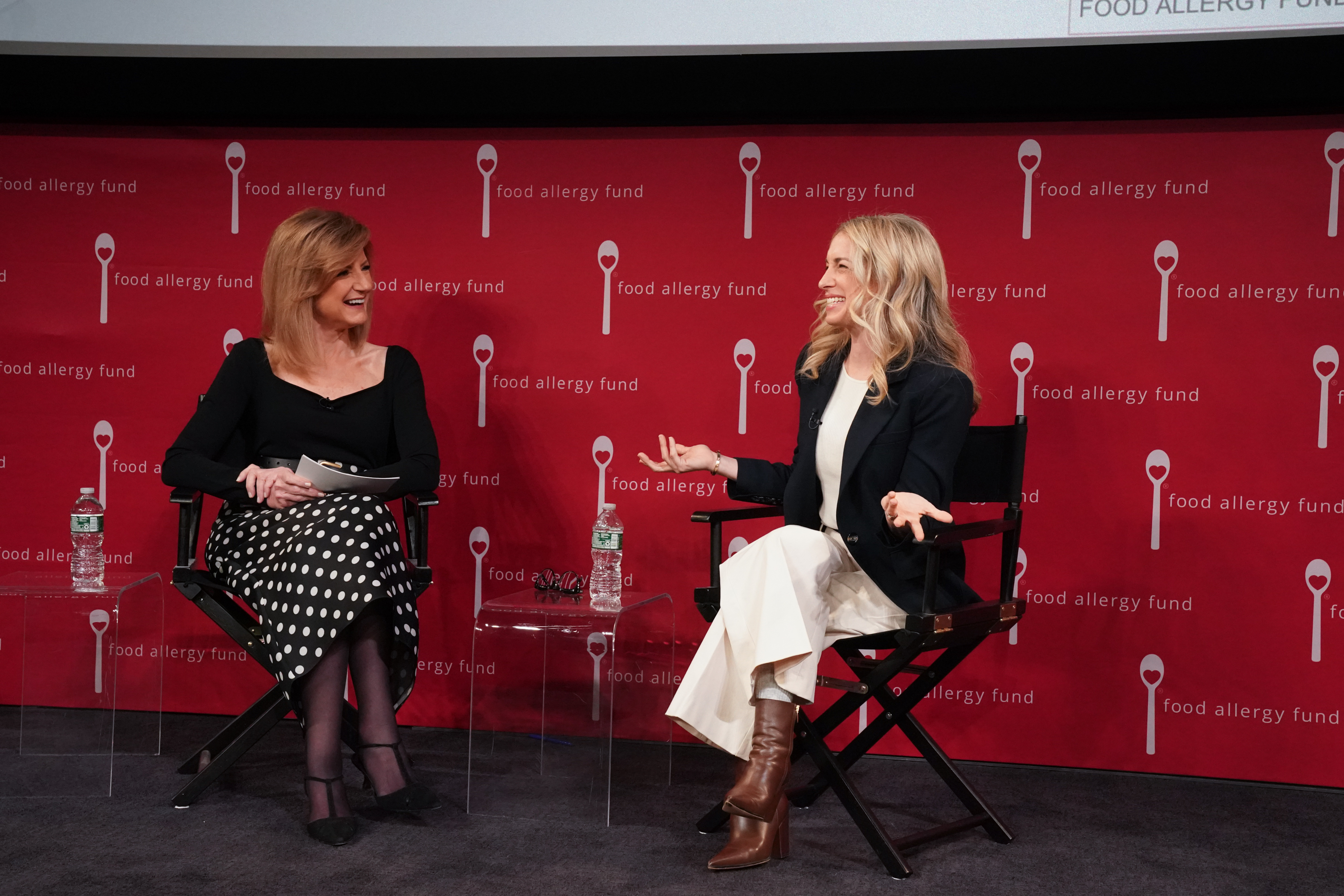
Dr. Becky Kennedy, founder and CEO of Good Inside joined Arianna Huffington, founder and CEO of Thrive Global, for a fireside conversation on how communication and confidence shape safety and inclusion for children living with food allergies at the Food Allergy Fund Summit at the Paley Center for Media in New York, NY. (Photo credit: Heidi Gutman for the Food Allergy Fund)
NEW YORK--(BUSINESS WIRE)--The Food Allergy Fund (FAF) today convened scientists, investors, policymakers, and advocates at its annual Summit in New York City, unveiling advances that mark a pivotal shift in food allergy care: from delayed detection and limited treatment options toward earlier intervention and emerging therapies. Highlights included first-of-their-kind findings on AI-powered anaphylaxis detection, progress in repurposing FDA-approved drugs as allergy treatments, and the debut of a caregiver resource developed with Dr. Becky Kennedy, clinical psychologist and founder of Good Inside.
“Food allergy research has long been fragmented across disciplines, institutions, and sectors, and that fragmentation costs patients time. FAF was built to be the convenor and connector this field needed," said Ilana Golant, Founder & CEO of FAF.
Share
Food allergies affect 1 in 13 children and 1 in 10 adults in the United States. Every three minutes, someone is rushed to the emergency room for a severe allergic reaction—underscoring the urgency of moving discoveries from the lab into real-world care for the more than 300 million people affected worldwide.
AI Enables Real-Time Detection of Anaphylaxis
Diagnosing food allergies remains one of the most challenging aspects of care, requiring patients to consume a potential allergen under clinical supervision, where early signs of anaphylaxis can be subtle and time sensitive.
Now, FAF has brought AI technology to anaphylaxis detection, with new FAF-funded study data at Mount Sinai showing that a child’s anaphylactic reaction could be detected in real time using smartwatch data and remotely monitored by a research team in Israel - before symptoms became clinically apparent. The study uses AI software developed by Anjo.ai.
“Our algorithm shows strong preliminary results in identifying allergic reactions earlier, and we are now able to monitor these remotely in real time,” said Tal Golan, co-founder and CEO of Anjo.ai. “This marks a meaningful step forward in improving the safety and precision of high-risk allergy diagnostics—and in enhancing safety in everyday life for families managing food allergies.”
Repurposed Drugs Accelerate Path to Treatment
The Summit also highlighted progress in FAF’s Drug Repurposing Program, which is advancing three already FDA-approved drugs—zileuton, abrocitinib and metformin—as potential food allergy treatments. Because these drugs have existing safety profiles, they can move to human trials far faster than traditional drug development allows.
FAF is funding the first human clinical trial of zileuton, an FDA-approved asthma drug, to determine whether targeting a newly identified immune signaling pathway in the gut can prevent anaphylaxis in people with food allergies. The trial is led by Dr. Stephanie Eisenbarth and Dr. Adam Williams at Northwestern University Feinberg School of Medicine.
“We’ve found there is a diverse range of how much allergen is absorbed among different people, which may help explain why reactions vary, and suggests this drug could potentially be used ahead of time in higher-risk situations to help reduce the chance of a severe reaction,” said Dr. Eisenbarth.
New Caregiver Guide Addresses the Behavioral Side of Food Allergy
Progress in food allergy extends beyond the scientific. The Summit also debuted Safe Kids. Strong Voices—a free caregiver guide FAF exclusively developed with insights from Dr. Becky Kennedy, founder & CEO of Good Inside, the leading parenting platform used by millions, offering practical language to help children speak up, feel understood, and stay safe. Dr. Kennedy joined Arianna Huffington, founder and CEO of Thrive Global, for a fireside conversation on how communication and confidence shape safety and inclusion for children living with food allergies.
“A parent’s number one job is to keep their kids safe - while also not taking away the chance for their child to build confidence, self-advocacy, and a real sense of capability. That balance? It’s not straightforward. It’s nuanced, and it can feel really hard, especially for parents of kids with food allergies. That's why I’m so glad to support families navigating food allergies through this guide.”
Connecting a Fragmented Field
The FAF Summit connects more than stakeholders, it connects a fragmented field. “Food allergy research has long been fragmented across disciplines, institutions, and sectors, and that fragmentation costs patients time,” said Ilana Golant, founder and CEO of the Food Allergy Fund. “FAF was built to be the convenor and connector this field needed, bringing together the scientists, investors, policymakers and advocates who are turning those collaborations into faster progress for patients.”
Additional Summit Highlights
The Summit addressed the full arc of food allergy progress—from lab to lived experience:
- Venture Philanthropy as a Funding Model: Leaders from Beyond Celiac, Vie Ventures, and the Crohn's & Colitis Foundation discussed how patient-driven capital and perspective are reshaping research funding.
- Families Driving Policy Change: Parent advocates shared how personal experience is translating into landmark legislation, including Elijah's Law, the ADDE Act, and the ADINA Act.
- Biotech and Translation: Leaders from Inimmune, Moonlight Therapeutics, Prota Therapeutics, and Ukko discussed next-generation approaches to prevention, immune modulation, and targeted therapy.
- AI, Immunology, and FAF’s New Israel Collaborative: Leaders from Technion, Tel Aviv University, and Anjo.ai explored how AI is advancing prediction, diagnosis, and treatment.
Key Facts
- Food allergies affect 1 in 13 children and 1 in 10 adults in the United States
- 75% of children with food allergies are allergic to multiple foods
- Someone is rushed to the ER for a severe reaction every 3 minutes
- Nearly half of adults with food allergies developed them in adulthood
- The estimated impact of food allergies is nearly $40 billion in societal costs
About the Food Allergy Fund
The Food Allergy Fund (FAF) is a science-driven nonprofit that serves as a granter and convener. FAF supports research to prevent, diagnose, and treat food allergies—a growing public health crisis affecting 10 percent of people in the United States and more than 300 million worldwide. FAF identifies and funds high-impact research, builds multi-sector coalitions, and works with scientists, policymakers, industry leaders, and families affected by food allergies. Through summits, partnerships, and strategic public private collaborations, FAF is transforming how food allergies are understood and addressed. Learn more at www.foodallergyfund.org.
Contacts
Media Contact: Amy DiElsi, Director of Communications, press@foodallergyfund.org